The Complete Guide to Airlines 3D Seat Maps, Virtual Cabin Tours and Interactive Seat Selection

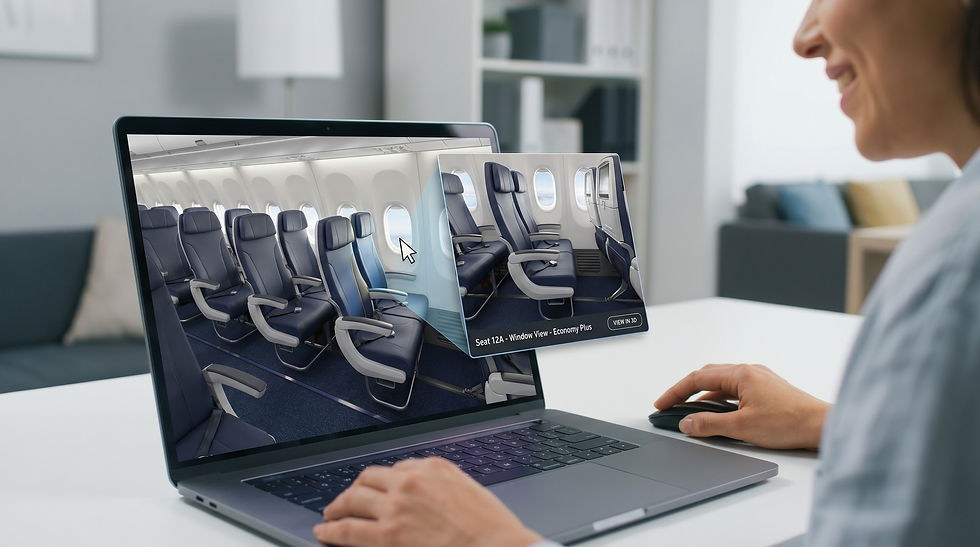
The aviation industry is rapidly embracing digital transformation, and passenger expectations have never been higher. Today's travelers expect the same level of personalization, transparency, and visual engagement from airline booking platforms that they receive from e-commerce, hospitality, and entertainment brands.
Traditional seat maps no longer provide enough information for modern travelers. Passengers want to understand exactly what they are purchasing before committing to a seat selection or cabin upgrade. This growing demand has accelerated the adoption of airlines 3D seat maps, virtual cabin tours, and interactive seat selection technologies.
These solutions allow travelers to explore aircraft interiors, compare seating options, and visualize the passenger experience before boarding. At the same time, airlines benefit from increased customer confidence, higher ancillary revenue, and stronger brand differentiation.
This guide explores how airline 3D seat maps are transforming the travel industry and why immersive visualization technologies are becoming essential for modern airlines.

What Is an Airlines 3D Seat Map?
An airlines 3D seat map is an interactive digital representation of an aircraft cabin that allows passengers to view seating arrangements in a realistic three-dimensional environment.
Unlike traditional seat charts that only display rows and seat numbers, a 3D seat map enables travelers to explore the cabin visually and understand how different seating options compare.
Passengers can view cabin layouts from multiple angles, compare economy, premium economy, business, and first-class seating, assess legroom and personal space, understand seat proximity to exits, lavatories, and galleys, and explore aircraft interiors before making a booking decision.
The result is a more informed and confident passenger experience.
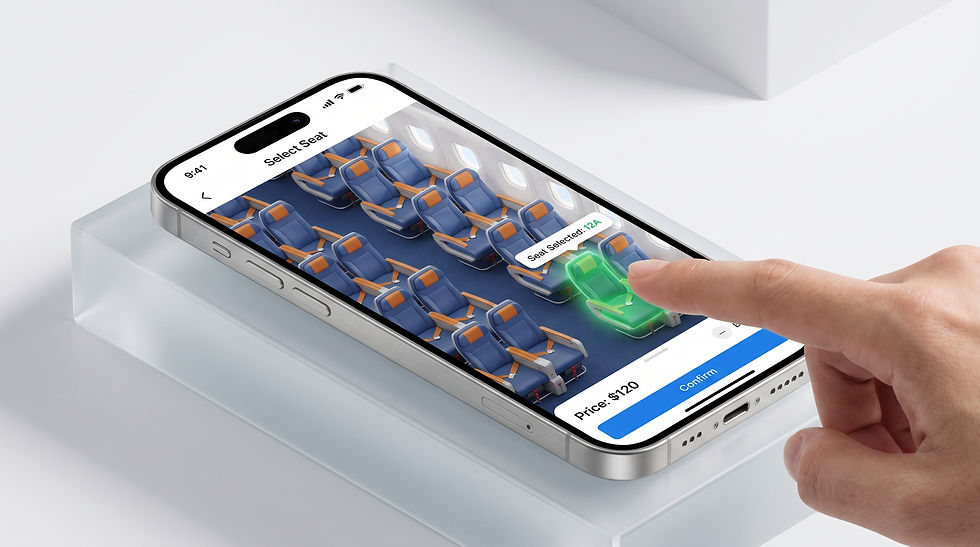
Why Traditional Airline Seat Maps Are Becoming Obsolete
For many years, static seat maps served as the standard method for seat selection. While functional, they often leave passengers with unanswered questions.
A traditional seat map cannot accurately communicate cabin atmosphere, window alignment, actual legroom, seat positioning, cabin design features, or premium seating benefits.
As online purchasing behavior evolves, customers increasingly expect visual confirmation before making decisions. This expectation extends directly to airline bookings.
Passengers are no longer satisfied with simply seeing a seat number. They want to experience the cabin environment before they travel.
The Rise of Interactive Airline Seat Maps
Interactive airline seat maps represent a major shift in how airlines present their products online.
Rather than displaying a simple diagram, these systems allow users to interact with the aircraft environment in real time.
Enhanced Passenger Confidence
Travelers can make decisions with greater certainty when they clearly understand the cabin environment.
Improved User Experience
Interactive visualization creates a more engaging booking process and reduces friction during seat selection.
Higher Premium Seat Conversion
When passengers can visually compare standard and premium seating options, they are more likely to purchase upgrades.
Reduced Customer Complaints
Clear expectations lead to higher satisfaction and fewer post-purchase frustrations.

How Virtual Cabin Tours Improve Airline Booking Experiences
Virtual cabin tours take airline seat visualization to the next level.
Rather than viewing a static image or a limited 3D model, passengers can explore an entire aircraft interior through immersive 360-degree experiences.
A virtual cabin tour provides a realistic understanding of seating layouts, cabin design, passenger amenities, premium service areas, boarding environments, and overall cabin atmosphere.
This level of transparency helps travelers feel more comfortable and informed throughout the booking process.
As a result, airlines can create stronger emotional connections with customers long before departure.
The Business Benefits of Aircraft Cabin Visualization
Airline cabin visualization is not only a customer experience tool. It is also a strategic business asset.
Increased Ancillary Revenue
Ancillary revenue has become a critical growth area for airlines worldwide.
When passengers can clearly visualize the advantages of premium seating, airlines often experience higher upgrade rates and greater seat selection revenue.
Higher Booking Conversion Rates
Interactive visualization reduces uncertainty and encourages passengers to complete their purchases.
Improved Brand Perception
Airlines that embrace innovative technologies are often viewed as more modern, customer-focused, and trustworthy.
Competitive Differentiation
In an increasingly crowded market, immersive passenger experiences can become a powerful competitive advantage.

How Airlines 3D Seat Maps Support Modern Passenger Expectations
Modern travelers expect digital experiences that are informative, visual, and interactive.
Across industries, customers are becoming accustomed to virtual property tours, interactive product demonstrations, 360-degree retail experiences, and immersive online showrooms.
The airline industry is following the same path.
Passengers increasingly expect airline booking platforms to provide the same level of transparency and visual engagement found in other sectors.
Airlines 3D seat maps help meet these expectations by making the booking process more intuitive and customer-centric.
The Future of Airline Seat Selection
The future of airline booking will be driven by immersive technologies.
Emerging innovations include real-time 3D aircraft rendering, virtual reality cabin experiences, augmented reality seat exploration, interactive passenger personalization, and AI-powered seat recommendations.
As these technologies mature, passengers will be able to evaluate and customize their travel experiences before purchasing a ticket.
Airlines that invest early in these capabilities will be better positioned to meet evolving customer expectations.
How Spherx360 Helps Airlines Create Immersive Passenger Experiences
As customer expectations evolve, airlines need more than static visuals and traditional seat maps.
They need immersive experiences that allow passengers to explore, understand, and connect with the aircraft environment before booking.
Spherx360 specializes in creating interactive 360-degree experiences, virtual tours, and immersive digital environments that help organizations transform how customers engage with physical spaces.
For airlines, aircraft manufacturers, airports, and aviation service providers, Spherx360 can support initiatives such as interactive airline seat maps, virtual cabin tours, aircraft interior visualization, 360-degree passenger experiences, digital customer engagement solutions, and immersive aviation marketing experiences.
By combining advanced visualization technologies with intuitive user experiences, Spherx360 helps aviation brands showcase their products in ways that build trust, improve engagement, and drive business results.

Why Immersive Aviation Experiences Matter More Than Ever
The airline industry is becoming increasingly competitive.
Passengers have more choices, higher expectations, and greater access to information than ever before.
Airlines that provide transparent, engaging, and immersive booking experiences are better positioned to improve customer satisfaction, increase loyalty, generate ancillary revenue, differentiate their brand, and strengthen customer trust.
Interactive visualization is no longer a luxury feature. It is quickly becoming a core component of the modern airline customer journey.
Conclusion
Airlines 3D seat maps are transforming how passengers explore aircraft cabins, compare seating options, and make booking decisions.
By combining interactive seat selection, virtual cabin tours, and aircraft cabin visualization, airlines can create more engaging customer experiences while improving commercial performance.
As the aviation industry continues its digital transformation, immersive technologies will play an increasingly important role in shaping the future of travel.
Organizations that invest in innovative visualization solutions today will be better equipped to meet tomorrow's passenger expectations.
For airlines seeking to elevate customer engagement and create memorable digital journeys, immersive experiences are no longer the future—they are the new standard.


Comments